


by Suzanne Daub
With more than a thousand works of art, artifacts, and treasures on display in nine premium galleries plus films, daily programs, and a fully accessible rooftop deck offering stunning views, the Nantucket Whaling Museum on Broad Street is the best way to discover our island’s fascinating maritime history and to gain a deeper appreciation for the people and events that helped define Nantucket.
While whaling is a well-known chapter in the history of Nantucket, our island’s story is richer and more far-reaching. The full story—including the Wampanoag people who lived here for centuries; the influence of Quakerism; islanders surviving the American Revolution; the independence and activism of Nantucket women; the contributions of the island’s Black residents; and the evolution of Nantucket into a summer destination—is told by historians and staff of the Nantucket Historical Association (NHA) in their Whaling Museum.
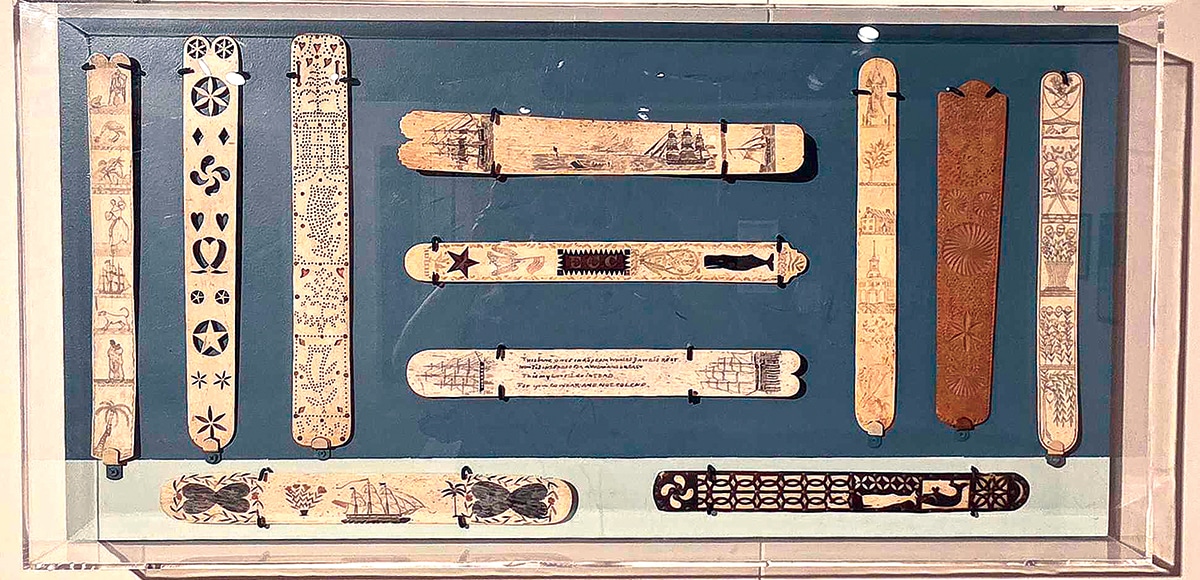
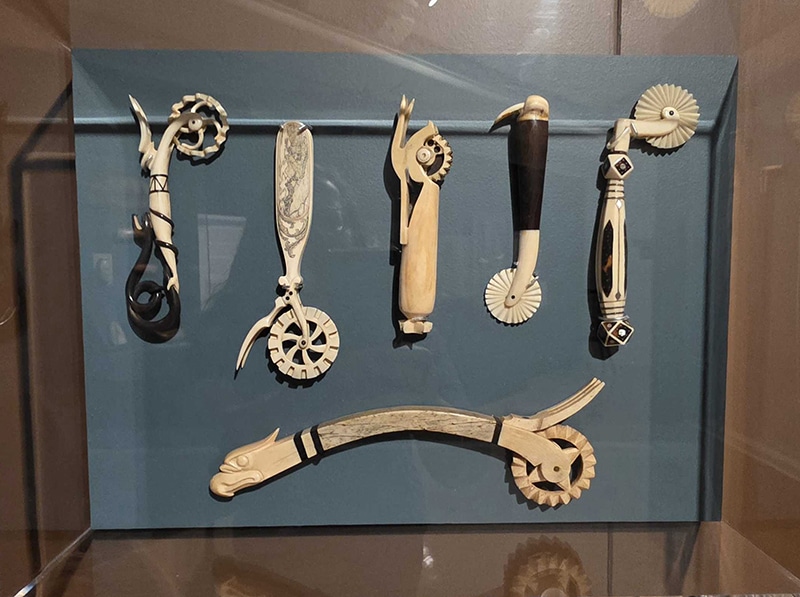
Nantucket Island’s global reach is illustrated by the museum’s featured 2026 exhibition, The Wider World & Scrimshaw. Open through November 1, this is a highly acclaimed traveling exhibition organized by the New Bedford Whaling Museum with support from Art Bridges. Anchored by scrimshaw, the folk art of engraving whale teeth and bone that whalemen practiced during long, idle stretches at sea, the exhibit covers so much more.
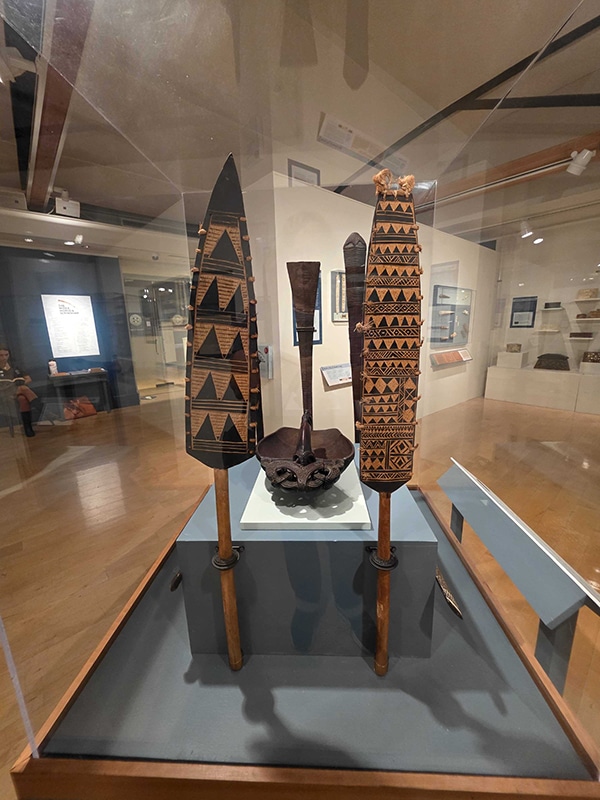
Featuring more than 300 objects, The Wider World & Scrimshaw sets American scrimshaw alongside carved decorative arts and material culture made by Indigenous communities across Oceania, the Pacific, and the Arctic—the same waters that Nantucket whaleships sailed in pursuit of their catch. Work from Māori, Aboriginal Australian, Inuit, and other Pacific and Arctic makers appears alongside the ivory engraved by American whalers, tracing carving traditions that were practiced along whaling routes.
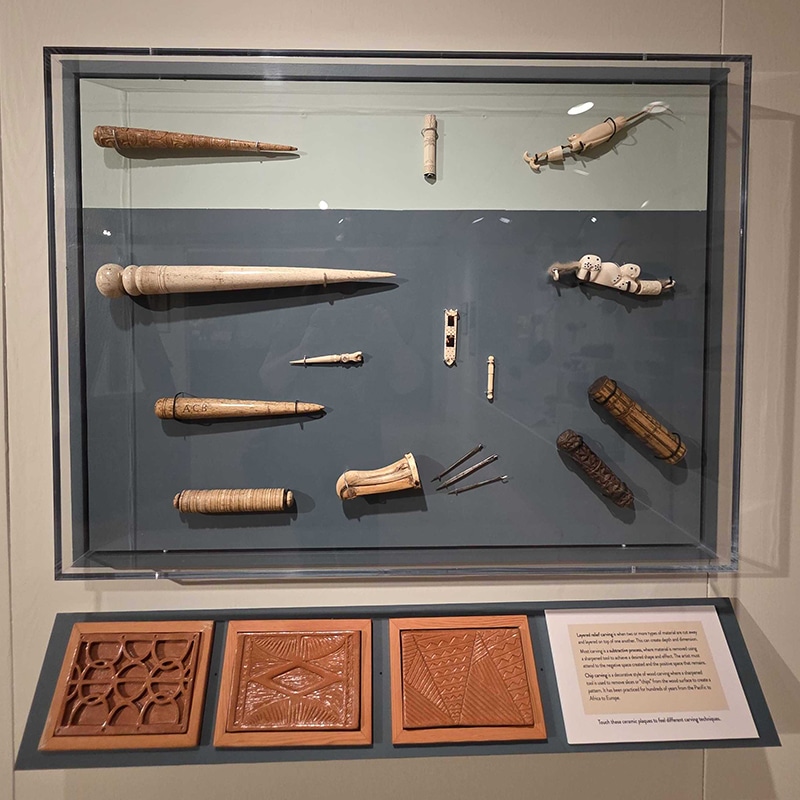
This interdisciplinary, community-driven, and collections- focused project engages questions about identity, place, and material, and considers how exploration and whaling impacted the production of material culture in this diverse region during the centuries between 1700 and today.
As NHA Gosnell Executive Director Niles Parker put it, the goal is to apply “a wider lens to our understanding of whaling, exploration, and artistic creativity” so visitors can “better understand the cultural exchange taking place which influenced disparate societies around the world.” That includes the harder history: the exhibition doesn’t shy away from how Native Pacific communities were affected by commercial whaling ventures and by the broader pressures of 19th-century colonialism and Western expansion. The show inspires questions about identity, place, and material, treating scrimshaw not as a quaint curiosity but as one thread in a much larger, and often fraught, global story.
According to Naomi Slipp, Chief Curator at the New Bedford Whaling Museum and co-curator of this exhibit, The Wider World & Scrimshaw also addresses some cultural myths about whaling and whaling history, “including ideas that many of the people on whaleships were Yankee New Englanders who set out to sea in a crew and came back on that vessel with the same crew.
“… in fact whaleships had really diverse crews…the crew that left on a whale ship often included people from around the world, and they didn’t always return with the same crew…there was a lot of changeover and transitioning crews…many people still connect in their minds the idea of scrimshaw and whaling with a very sort of New England and very white point of view… But that is far from true… people across the globe came into contact with whaling vessels…and those vessels traveled across the Pacific…They established colonies, whaling stations, and trade networks. And they picked up supplies, materials, and crew. So that as a result, crews of US whaling vessels included people from the Azores, Kabou, the Pacific Islands, Native Americans, people of color, both free and escaped enslaved persons, ethnic minorities, and recent immigrants from around the world… Port cities like New Bedford and Nantucket were global hubs where these large populations of people mixed and mingled contributing to a regional culture, economy, and landscape that was international in character and very multicultural,” Slipp explained in a recent talk she gave at the Nantucket Whaling Museum.
The Wider World & Scrimshaw connects the historical and contemporary through cultural products ranging from Oceanic material culture and Arctic carvings to engraved sperm whale teeth. Short films and touchable samples of natural materials and carving techniques provide additional opportunities to engage with exhibition themes that include paddles, dance wands & clubs, busks, fids & needle cases, coconut dippers, totem poles, trade goods, and more.
“The NHA’s Whaling Museum interprets the history of 19th century American whaling, where whale-hunting voyages from New England headed to all corners of the Pacific world. The Wider World & Scrimshaw exhibition will bring non-New England perspectives into our museum and help our visitors understand the cultural interactions that resulted from this commercial activity,” said Michael Harrison, NHA Chief Curator and Obed Macy Research Chair. “The NHA is excited to share this significant exhibition with our visitors and to open up our interpretation of whaler’s scrimshaw to new and broader perspectives.”
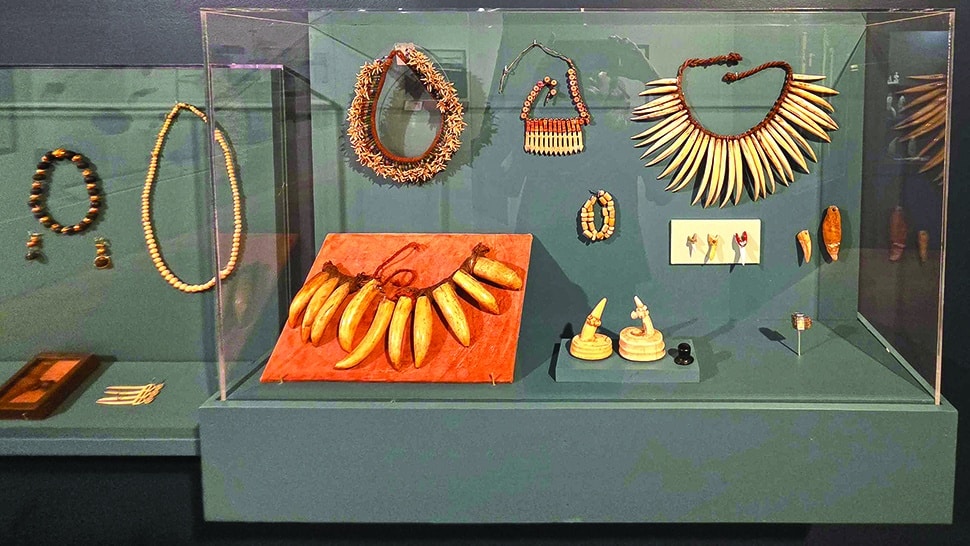
The Wider World & Scrimshaw in the McCausland Gallery is the 2026 main exhibit inside a museum that uses whaling as an entry point to wider Nantucket history, not its sole subject. A visit to the Nantucket Historical Association’s Whaling Museum typically moves through several distinct experiences.
Gosnell Hall explores what it was like to be part of the demanding and dangerous trade of 18th century whaling. Here visitors will see the imposing skeleton of a 46-foot male sperm whale “diving” from the ceiling.
Next is the 1847 Hadwen & Barney Oil and Candle Factory which has been carefully restored to reveal significant elements of the original factory, including a two-story lever press—the only original whale-oil lever press still in place in the world. This area tells the story of how whale oil became a global commodity and the businesses built around it.
The dramatic story of the Essex, is presented in the museum’s overlook gallery, recounting the reallife disaster that helped inspire Moby-Dick.
Neptune’s Grotto is a smaller gallery of oddities, including a tusked walrus skull that resembles a fossilized cyclops, and a dramatically contorted whale jaw.
Designed for younger visitors, The Discovery Center makes Nantucket history come alive with interactive, hands-on activities, crafts, and games. For visitors exploring the museum with kids, the NHA’s Family Connections Tour is designed to make Nantucket’s history engaging for young audiences by pairing guided storytelling with the same hands-on spirit found in the Discovery Center.
The Scrimshaw Room is a dedicated gallery containing over a century and a half of collecting by the Nantucket Historical Association. This room houses some of the earliest and rarest engraved sperm whale teeth in existence, worked by some of the most celebrated scrimshaw artists. Here visitors can see the classic Nantucket tradition in its own dedicated space, then step into the featured exhibition to see that same tradition placed in conversation with the wider Pacific and Arctic carving worlds that whaling routes connected it to.
Tucker’s Roofwalk is a fully accessible observation deck that offers a sweeping, panoramic view of Nantucket Harbor and the town.
What ties all of this together—the Scrimshaw Room, Tucker’s Roofwalk, the films, the family programming, and now The Wider World & Scrimshaw— is the NHA’s ongoing commitment to telling the full arc of Nantucket’s history. Whaling built the island’s fortune and identity for a time and remains a visible subject in the museum. But the NHA’s galleries and programs include more than that single narrative to include island life that came before and after the days of whaling. The Wider World & Scrimshaw exhibit shows how Nantucket has long been part of a much bigger, interconnected world.
Nantucket Whaling Museum
Peak season hours: daily 10 am to 5 pm
13 Broad Street • nha.org
@nantuckethistoricalassociation
