


by Dr. Sarah Treanor Bois, PhD
Director of Research & Conservation at the Linda Loring Nature Foundation
There once was a plant from Nantucket
Purple flowers so gorge they would pluck it
Blue-eyed grass is her name
A rare species they claim
So please don’t put in your bucket
Mid-June is the perfect time to see one of Massachusetts’ rare plants on Nantucket. Like a Jack-in-the-Box popping up and then disappearing again, this rare beauty flowers from the end of May through June and is almost invisible to the naked eye the rest of the year.
Sandplain blue-eyed grass (Sisyrinchium fuscatum) is not a grass at all but a member of the iris family. They are like miniature versions of the common blue iris (Iris versicolor, aka blue flag iris). It also doesn’t have blue eyes…they are yellow! And just like their larger purple cousins blooming around the island, our sandplain blue-eyed grass plants are show-stoppers right now.
Blue-eyed grass gets its name from the habitat it so loves—our sandplain grasslands and coastal heathlands, a globally rare collection of grasses, wildflowers (forbs), and low shrubs that love our nutrient-poor, sandy soils and dry conditions. You’ll find blue-eyed grass by looking down; the plant is only about 5 to 8 inches tall. Deep, green foliage forms small, dense tufts giving the plant an overall bunchgrass look. But it’s really the flowers you’ll spot first. The bright, violet-blue flowers are small (0.3-0.4 in) and often numerous, from 3 to 12 per plant. One flower alone is to be admired, but a field of tiny purple irises is a meditation on beauty.
The petal color actually varies from light purple (almost white) to blueish purple to dark purple. But each has a tell-tale contrasting yellow center: a wink among the grasslands. In my experience, when you find one, there are typically more nearby. When sandplain blue-eyed grass is fruiting, you’ll see the stems turn darker in color and small brown to black fruits hanging where the flowers once were.
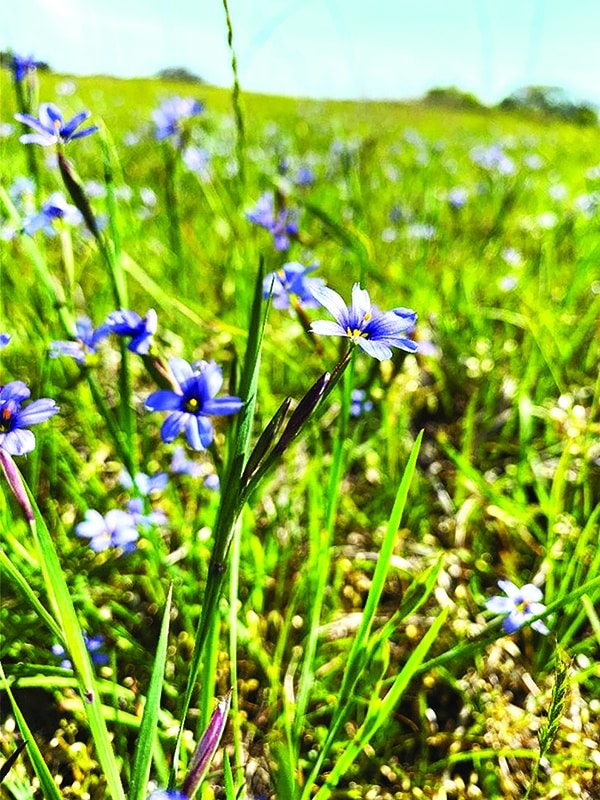
Sisyrinchium is a large genus of annual to perennial flowering plants in the family Iridaceae (Irises). There are several species in the eastern United States and three on Nantucket, though none as abundant as S. fuscatum. Sandplain blue-eyed grass is the only member of the genus with dense, fibrous tufts at the base of the plant. To find them, close examination of the leaf base may be necessary. Unlike other species of this genus in Massachusetts, this species is specific to open, dry, sandy coastal habitats—perfect for Nantucket.
On nature walks out at the Linda Loring Nature Foundation, people are often surprised to learn that one of the seemingly common plants at their feet is protected by the Massachusetts Endangered Species Act (MESA). Not only is S. fuscatum on the MESA list as a species of special concern, the Mass State Wildlife Action Plan (2025) lists this species as one of greatest conservation need.
Despite being a state-listed “Species of Special Concern,” it is abundant on Nantucket and Martha’s Vineyard. It thrives in our open, sandy grasslands, and disturbed heathlands. While it’s an embarrassment of riches here on-island, it’s rare elsewhere, and extirpation throughout most of its historic range means it still deserves our protection. Think of the island as refugia; this is the last place for it to grow and proliferate the way it once did in other places. Here we likely have a strong genetic stock with many individuals in each population. Nantucket can also provide seeds to other locations for reintroduction, seed banking, and research studies, all monitored by the state, of course.
As is the case for so many of us, for this special flower Nantucket is a refuge.
Once found throughout the Atlantic coastal plain (Florida to Massachusetts), sandplain blue-eyed grass has been extirpated from parts of the historic range. Remaining populations are small and disjunct. It previously occurred in Michigan where it is now presumed eradicated. It is also possibly extirpated in Pennsylvania and Rhode Island. It is imperiled in Massachusetts, North Carolina, and Virginia and critically imperiled in New York and Nova Scotia.
So why are they so rare in the first place? Threats to this species include habitat loss due to development and exclusion of fire or other disturbance, which can lead to competition from invasive and aggressive native species (e.g., black huckleberry, scrub oak). Natural succession without disturbance leads to an increase in woody (shrub and tree) cover, which will ultimately shade out the small blue-eyed grasses. However, they remain dormant in the seed bank, waiting for some new disturbance to let in the sunshine, stirring them into aboveground life again.
We are an island of resilience: people, tides, beaches, as well as our flowers! S. fuscatum responds well to disturbance, but not digging up or picking). They thrive in well-worn deer trails and the edges of paths and dirt roads. At LLNF, we have been documenting the increase of S. fuscatum post-management since 2018. In several locations throughout our 275 acres, we have been managing to reduce woody cover, especially from non-native trees. We have found that in removing the trees mechanically we disturb the soil and open up the tree canopy, which allows long-dormant seeds in the soil to emerge. We have seen an increase in sandplain blue-eyed grass plants in several areas. They had been in the seed bank all along, just waiting for the right conditions to emerge.
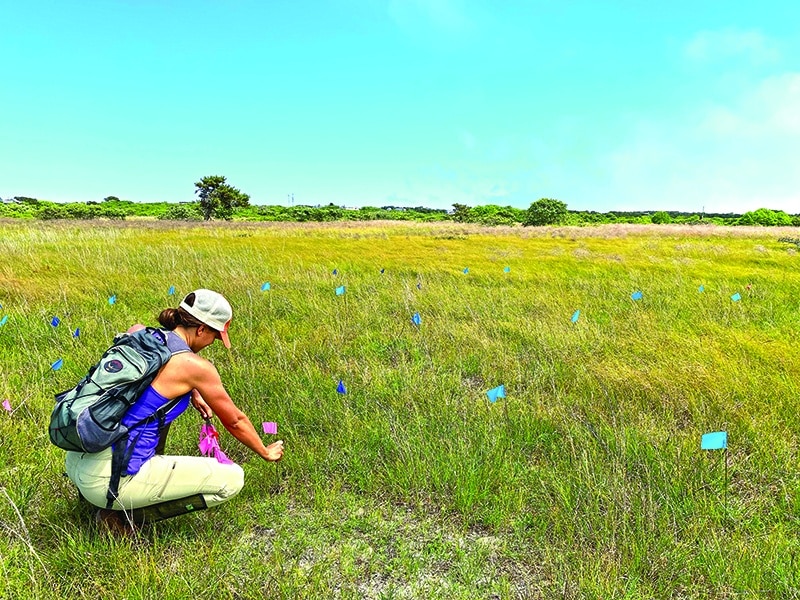
This time of year, in addition to the flowers themselves, you may see bright, multi-colored survey flags in some of your favorite grassland habitat. Congratulations, you’ve just discovered research in action. Seasonal staff from our conservation organizations identify, mark (with flags), and GPS plant locations while they are in flower for easy identification. Information is also recorded on the surrounding habitat, soil, and any impacts to the plants. These data are useful for the state to know where sandplain blue-eyed grass is growing and thriving in Massachusetts, and this information contributes to future management plans for the species. If you spot a field full of flags, you likely have come upon a surveyed area that still needs to be GPSed. Please leave the flags alone and admire the plants without picking or otherwise disturbing. These plants love disturbance, but not while they are in flower or setting seed.
Despite its rarity elsewhere and abundance on-island, there is little research on this particular species. S. fuscatum is surveyed and monitored and used as an indicator of biodiversity and habitat health. But we know little about its population biology. It is ripe for some graduate student dissertation or other detailed research. And Nantucket is just the place to do that given our huge populations. At LLNF alone we have many thousands of individuals.
If you’re already on Nantucket, you are in a prime spot to see this plant. During its peak season, you can easily spot sandplain blue-eyed grass growing wild in open areas, along trail edges, and in mowed sections of local ecosystems like the Head of the Plains, parts of the Middle Moors, Linda Loring Nature Foundation, and Smooth Hummocks, among others. You actually may have it in your yard if you have some wild landscape or a deer trail.
Remember to start your search in the afternoon. Sandplain blue-eyed grass is not an early riser. The flowers open during the day (generally after noon) and close at night (a great excuse to sleep in).
Another bonus: deer don’t eat them!
To see sandplain blue-eyed grass this season, take a walk in a grassland natural area, sign up for a guided nature walk, or ask a conservation professional to show you. Remember to take only pictures!
