


by Dr. Sarah Treanor Bois, PhD
Director of Research & Conservation at the Linda Loring Nature Foundation
As we come into September, those of us lucky enough to stay on Nantucket begin reclaiming some of our favorite spots. I walk every morning with my high energy dogs, and I pick and choose places to walk based partially on the fact that I want to go where there are few people and other dogs. I also get bored easily, so I try to mix up these walks, try new places or visit trails at different times of the year. One of our favorite trails is the Shawkemo Highlands. I’ve always called them Shawkemo Hills, but recently the Nantucket Land Bank put new signage at the trailhead with the “Highlands” label, and that moniker fits.
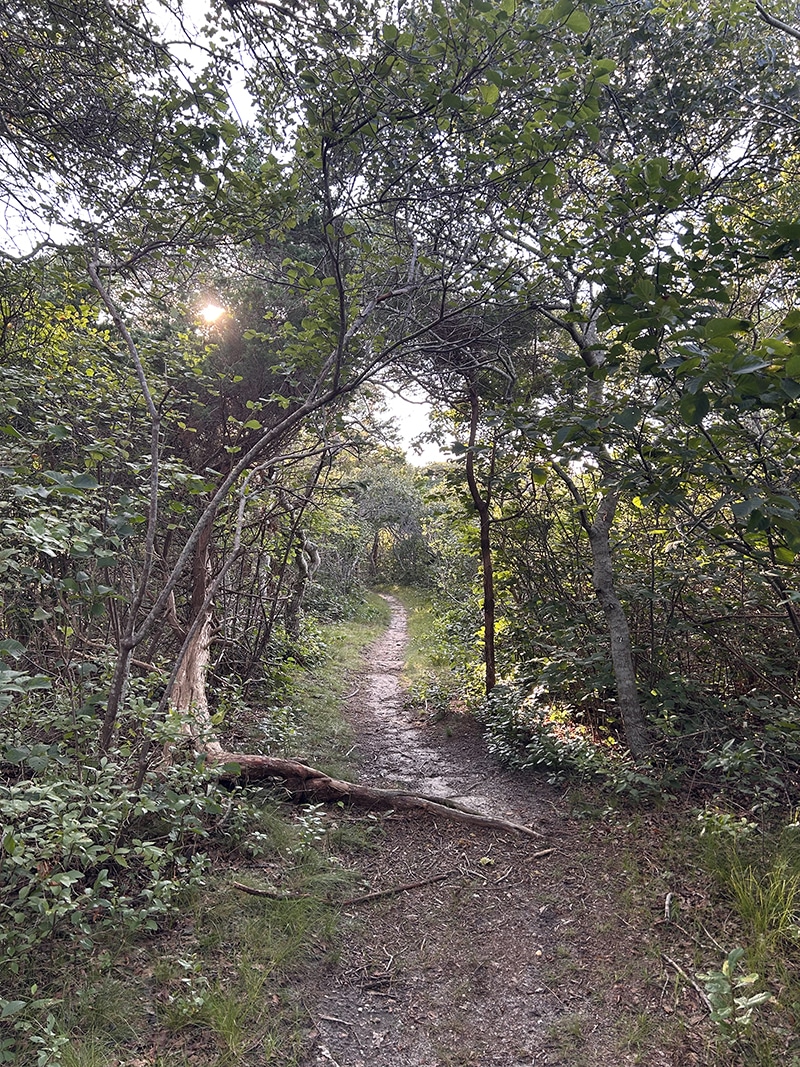
I don’t usually share my favorite, secret places, but I’m not shy about sharing this spot if you don’t know it. There are so many trails and connections to the Middle Moors as part of the rail network in this area, that no one person needs to have the same route.
The name Shawkemo is a Wampanoag word meaning “middle” or “middle field of land.” Head to Polpis Road (in the middle of the island). A small parking lot at the trail head is at 117 Polpis Road (nantucketlandbank.org/property/shawkemohills). The trail starts off in the woods: pines and deciduous shrubs line the sandy trail. If you’re walking with another person, it’s a tough one to walk next to each other. I love this trail when there might be rain since it’s wooded in part—helps me dodge the raindrops. It’s also great in the heat of summer. The early morning shade keeps things cool for me and my dog.
According to the Nantucket Land Bank website, the trails of the Shawkemo Highlands “illustrate the influence of the last ice age on Nantucket’s topography. The southern trail rises to 94 feet and offers stunning views of the Middle Moors and Nantucket Harbor. These formations are the Shawkemo Hills, which are one example of the sediment deposits left behind after the Laurentide glacier receded approximately 18,000 years ago.”
The hills may not be alive with the sound of music, but they are alive. We don’t have much for hills around here and a sloping trail in the woods is a welcome change. It may not be “Nantuckety” enough for some, but I like that it feels a bit more like traditional New England trails…or maybe I’ve just been on-island too long.
My dog, Mako, and I walk the Shawkemo trail frequently, part of our regular rotation. This walk starts off in the late afternoon nearing the end of August. We waited until the sun started to dip to avoid the hottest part of this muggy day. Early morning is usually my favorite, but on Sundays we sleep in.
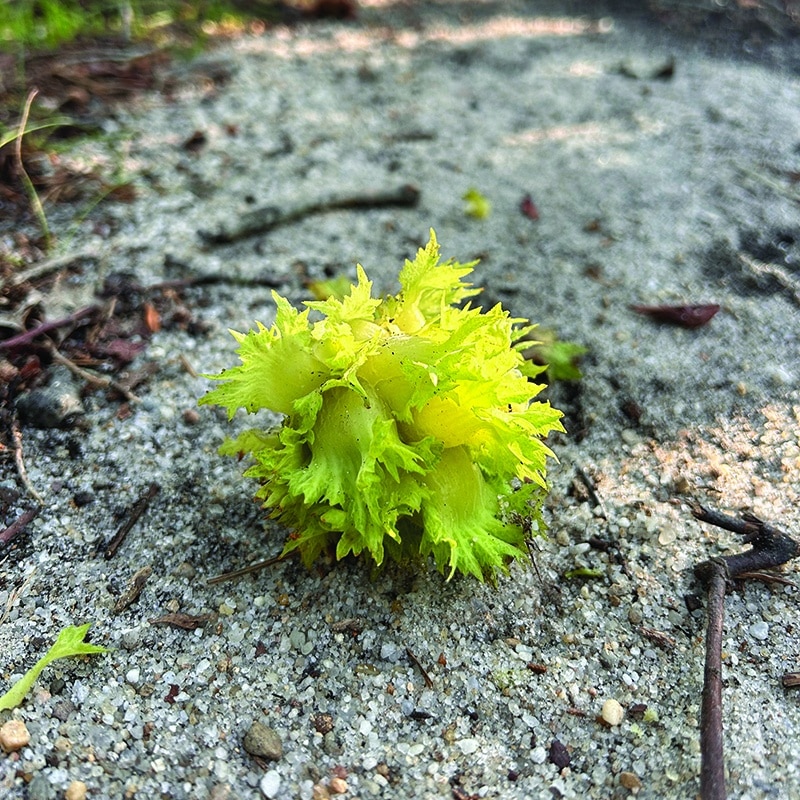
The trail is lined with deciduous shrubs; Sweet fern, bearberry, American hazelnut, lowbush blueberries. Evergreen pines, cedars, wintergreen and mayflower abound. In May there are pink lady slippers. In late July we have a few wood lilies.
After about a quarter of a mile, we climb out of the woods and into a clearing, a vista. From here we can see Nantucket Harbor. “Nantucket summer” (town, crowds, traffic, etc.) had all seemed so far away as we traipsed through the woods. But this view, while gorgeous, lets me know that it’s not all that far away.
Hiking a little further, we cross from Nantucket Land Bank property and into the Nantucket Conservation Foundation land which is part of the Middle Moors. You wouldn’t know it just by walking, the properties are contiguous, but this is where we come to the fire break. The fire break is a roughly 250-foot-wide swath that is brush cut with some regularity. This was first done in 2015 as part of the Foundation’s Middle Moors Wildland Fire Management Plan: the intention of the break being low enough vegetation that it would slow a potential wildfire. What that means for us hikers is that we emerge from the woodlands to an open low-shrub and grassland expanse. The fire break is what allows us to really see the terrain, the rolling hills of the moraine and imagine the glacier that formed them.
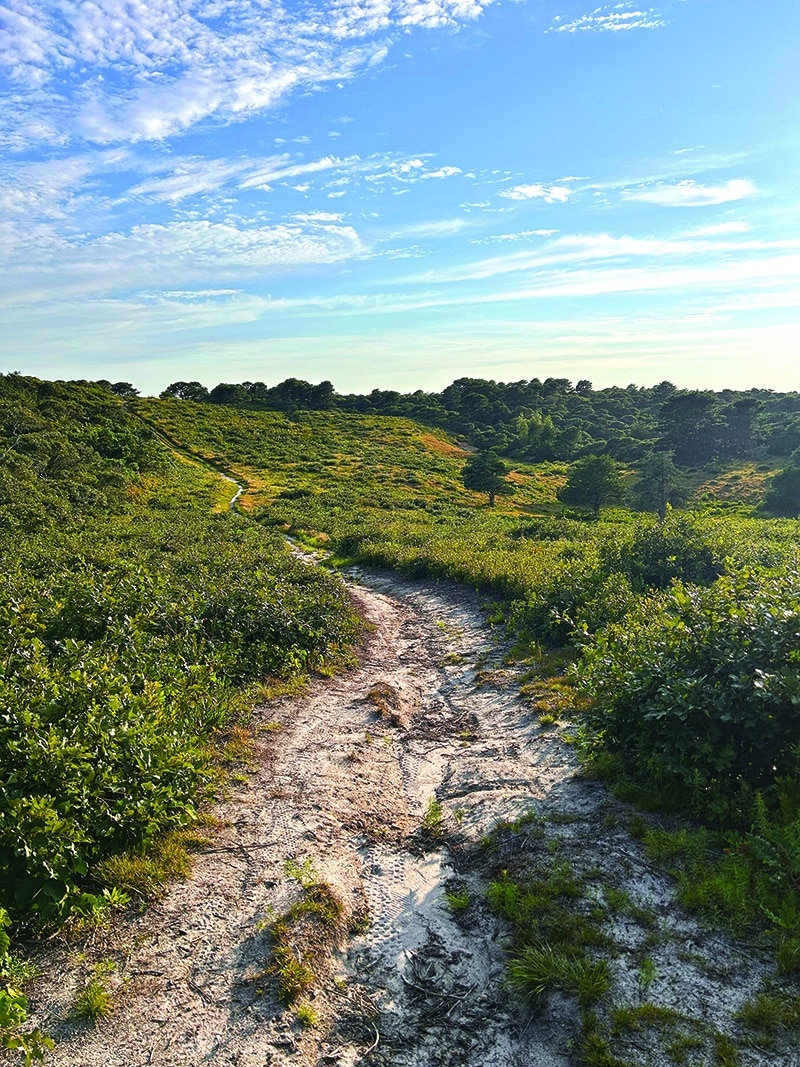
There are multiple options for trails from here. We (Mako and I) walk the trail that goes along with the fire break. We go up and down with the terrain. In some years, when we’ve had some snowfall, I’ve seen families sledding these trails. I don’t know how you drag a sled all that way, but it did look pretty epic.
After travelling along the break, we dip back into the woods and head down low into a wooded gully. In the middle of the trail, we find a cluster of American hazelnuts. Most of the nuts have been separated from their casings, likely a snack for a squirrel. The fact that it’s in the middle of the trail makes me think we interrupted mealtime.
As we walk, the squirrels chitter at my dog. Mako loves this trail, but she’s forever tormented here. The squirrels race to the top of the scrub oak, which is only about 8 feet tall. It’s just enough to hide from a tenacious labrador, but close enough that she can see them. They squawk and yell and sometimes throw things at her. She has yet to get one—at this point we’ve started calling them Moby Dick – Mako’s own white whale.
In the dappled sunlight along the trail, we see a late purple aster blooming trail side. The fruiting bodies of mushrooms are sprouting from the sandy path edges. The recent rain seems to have delighted them. I’m not great with naming mushrooms so we look and don’t pick.
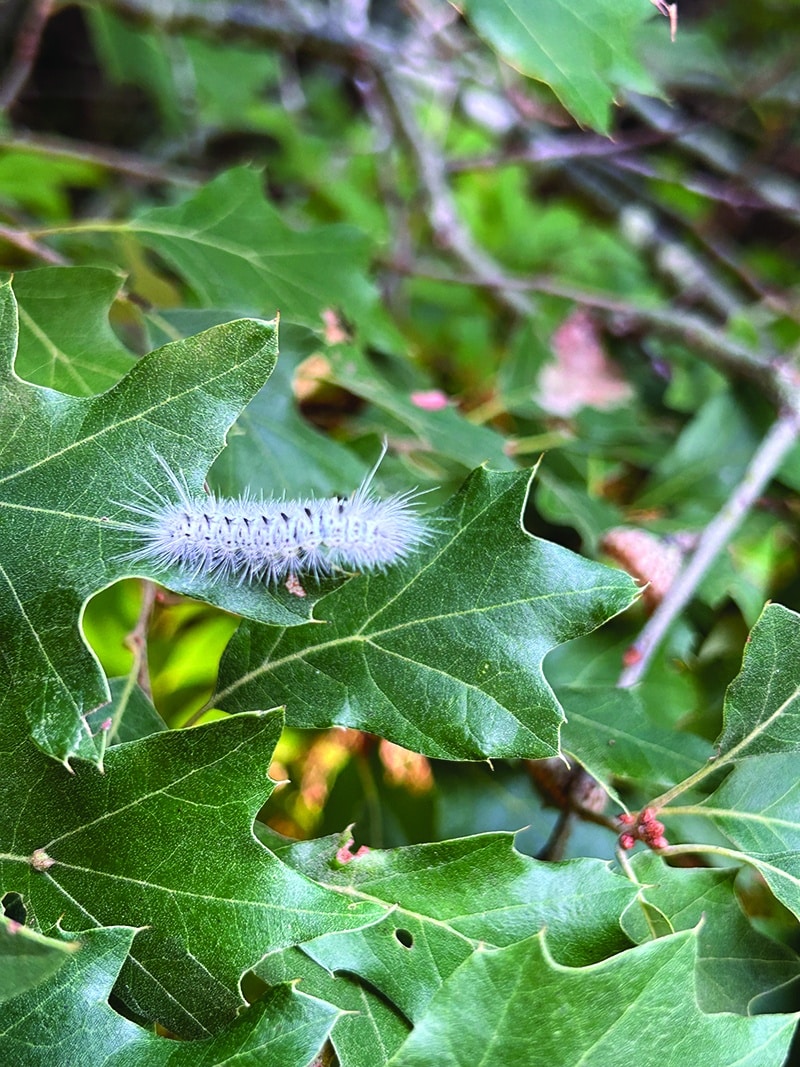
The little blue stem grasses and pockets of sandplain grassland are found among the scrub oaks. The fire break creates amazing habitat for these early successional species. It’s also a caterpillar‘s delight, and we see several when we pause to investigate oak leaves. The black and orange Barren‘s Buck moth on scrub oak and black and white Hickory Tussock moth caterpillars in the understory. A few white fluffy puss month caterpillars are also on Huckleberry leaves. Watch out for those: one touch and they sting you.
In the approximately one hour of our walk, we passed only one loan jogger. He seemed just as surprised to see us. People are used to their solitude on this trail. The tire tracks in the sand remind me that we sometimes bump into mountain bikers on Saturday mornings. The tracks are the only trace on this Sunday afternoon.
There are so many acorns on all the oaks this year. I think the rain has really spurred a mast year. I bet the deer will be delighted.
In just a month or so this area will be opened again to hunting, so we’re trying to enjoy it while we can. It’s not that I’d begrudge hunters their special spots. It’s more that we don’t want to disturb their hunt. We want to give hunters a quiet opportunity and good luck. A hyper labrador won’t help.
We get back to the truck just before sunset. Another day, I will stay at the high spot to view the setting sun from the peak of Shawkemo Highlands. For today, Mako and I head home.
