

by Dr. Sarah Treanor Bois, PhD
Director of Research & Conservation at the Linda Loring Nature Foundation
Right now is the perfect time to go on a hunt for one of Nantucket nature’s treasured beauties, the pink lady’s slipper orchid.
The pink lady’s slipper orchid (Cypripedium acaule) is Nantucket’s most popular orchid (or the one most often seen), likely because it is hard to miss when in bloom. As the name suggests, the bloom resembles a small, pink ballet slipper fit for a squirrel. This orchid is locally common with each plant growing a single f lower. These individual f lowers tend to grow in clusters, so where you see one, you may see several. This grouping lends itself to magical thinking, imagining a dancing troupe of forest creatures. And while this isn’t a fairy tale, there is something magical about orchids and where they grow. It’s nearly impossible to duplicate the conditions necessary to cultivate these lady slippers. That’s why seeing them in the wild along a trail can feel so special.
The first thing to note is that this hearty perennial survives the winter underground. After this past winter—harsh temperatures and lots of snow—the leaves of the lady slipper orchid emerge in late spring with the flowers visible late May to early June. Now is the perfect time to hunt. This past weekend, I spotted early emerging leaves along a favorite forested trail. This has been a perfect spot, with slipper blossoms seen for the past 4 years in the same section of trail.
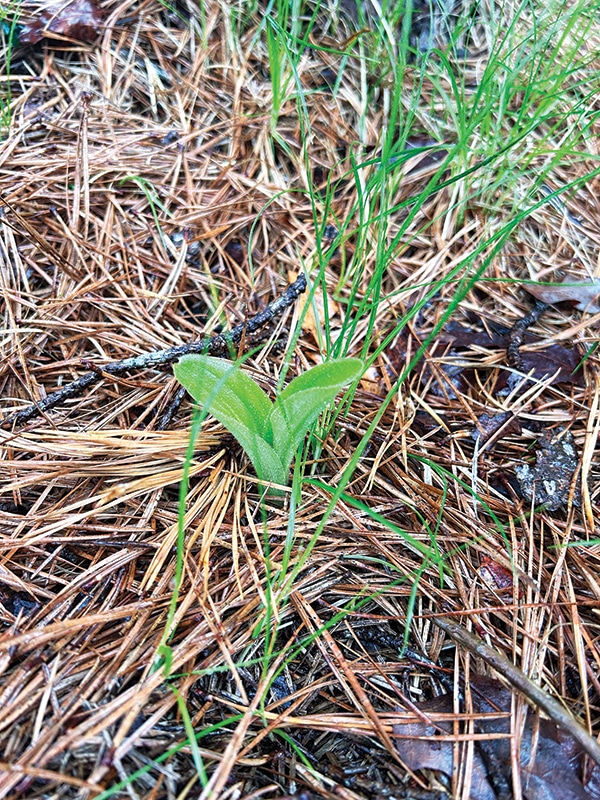
When fully emerged, the pink lady’s slipper is an upright plant ranging from six to twelve or so inches tall. Each plant has a pair of basal leaves, meaning that the leaves grow from the lowest part of the stem. The leaves are one to three inches wide and about six inches long, oblong. The leaves are smooth (not toothed), usually a rich green above and silvery and hairy below.
Lady’s slippers are found in almost every county in New England. They may be widespread, but their specific requirements and symbiotic relationship with fungal associates restricts available habitats. Off-island, the pink lady slipper is considered a woodland plant. On Nantucket, it occurs in more diverse habitats: the heathlands of Head of the Plains, or shrublands of the south coast, as well as the dappled edges of the pine forests. The pink lady’s slipper is the most adaptable of the lady slipper orchids in terms of its moisture tolerances. It can flower in bogs and wet woods as well as dry, sandy uplands. It just likes nutrient-poor, acid soil, which is perfect for Nantucket!
At the Linda Loring Nature Foundation, a heathland clearing between pitch pine trees has often held dozens of lady slippers. In 2019, after restoration efforts cutting Japanese black pine trees, the cleared area was awash in pink lady slipper plants. Some were only vegetative (not blooming that year), but there were hundreds appearing after the pine clearing.
Other common names for lady’s slippers include Moccasin Flower, Stemless Lady’s Slipper, Squirrel Shoes, Small Pink Lady’s slipper, Lady’s slipper Orch, Pink Lady’s slipper Orchid, and American Valerian. The latter name is a reference to the fact that this plant was once widely used as a substitute for the European plant valerian for its sedative properties.
Unlike many other flowering plants, these orchids do not provide pollinators with any pollen or nectar lure. Instead, their structure fits function. The lower section of the orchid flower, the lip, forms an inflated pouch with a cleft in the center—this is the part that resembles a silken ballet slipper. Lady’s slippers are pollinated by bees, attracted to their color and fragrance, that enter the flower through that slit in the front of the pouch. Once a bee enters the colorful, inflated lip through a one-way opening, it quickly discovers that there is neither pollen nor nectar available, and that it cannot readily escape. The insects can escape only through exits beneath each pollen mass. When the bee passes under the stigma, it deposits pollen from previous visits to other flowers and picks up a fresh load of pollen.
Although flowers remain on the plants for several weeks to increase the chances of pollination, fewer than 10% of plants in a population will produce fruit. Fortunately, each fruit contains thousands of seeds. But the seeds are tiny, dispersed by the wind, and contain no stored food reserves. They must land on a patch of soil containing a specific fungus that provides nutrients for germination and subsequent plant growth.
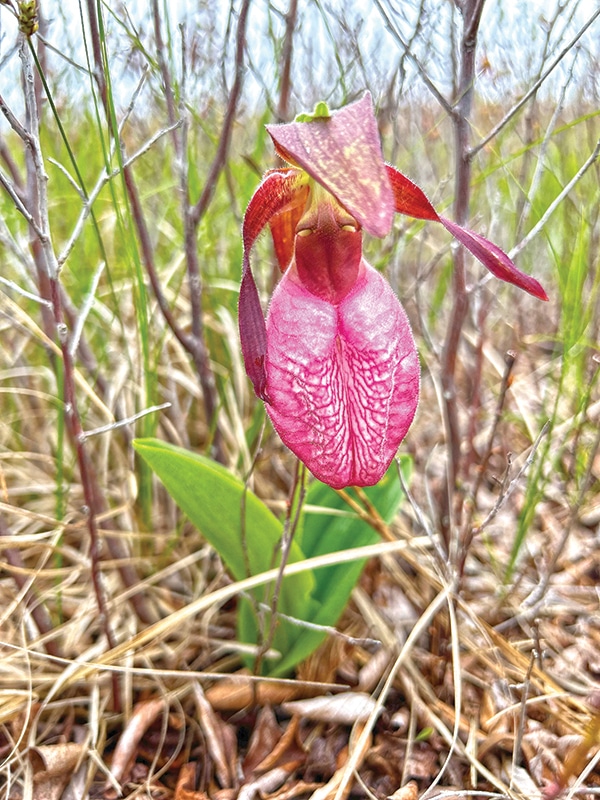
It’s not surprising that lady’s slippers are sought for their beauty. Native orchids have very specific cultural needs and close symbiotic relationships with soil fungi, so they rarely do well when transplanted from their wild habitat into a garden. Pink lady’s slipper plants dug from the wild and transplanted rarely reproduce due to the lack of this fungus. They also fail to thrive and will die after a couple of years, unless the specific fungus is present at the transplant site.
The best way to ensure their continued growth on island is to protect their habitats and the individual plants. So where can you see a lady’s slipper? Trail edges are good spots since they often have dappled sunlight. The acidic soils of pine forests are ideal, and you’ll see flowers popping up right in the needle thatch.
If you’re lucky enough to catch a glimpse of pink lady’s slipper or other wild orchids, be sure to leave them undisturbed—do not pick these! A picked lady slipper will not rejuvenate itself, and the plant has a less than 5% transplant success rate. Picking may be illegal and will limit the reproductive ability of the plant and can affect the population. They are for the enjoyment of everyone.
Remember to take only pictures and leave only footprints.

