



by Dr. Sarah Treanor Bois, PhD
Director of Research & Conservation at the Linda Loring Nature Foundation
The primary goal of a conservation-based internship is to bridge academic knowledge with practical field experience to develop the next generation of environmental stewards, researchers, and land managers. These programs are designed to benefit both the host organization and the intern through a blend of field labor, professional growth, and public service. We are fortunate on Nantucket to have so many conservation and science-based organizations providing those opportunities and mentoring the next generation of professionals.
I first came to work on the island in the summer of 1998 as a seasonal intern for the Maria Mitchell Association. As a scientist and conservation professional (I was an environmental science major at UMASS Amherst and a scientist at heart), Nantucket was the perfect place to start a career. What I learned my first summers on Nantucket changed the direction of my early career. There were so many projects to get involved with and people to learn from: bird banding, botanical walks, collecting snakes and insects, communicating science to little kids… It was my first foray into possibly making a career out of what I loved and what I was learning.
But this story isn’t about me, it’s about the next generation of conservation professionals. Every summer season, a crop of young professionals trying to gain experience in the conservation world arrive on-island to work for one of our many conservation organizations. Research, environmental education, restoration ecology, land management: they come for a host of reasons and a host of positions. But it’s not just a summer of fun in the sun. The acres of conservation open space, the numerous rare species, scientific mentors, and the donors to help fund it all make Nantucket a premier training ground for intrepid interns and other seasonal research staff. After my own experiences in the late 1990s and early 2000s, which were transformational for me, I am now in a position to pay it forward and provide these experiences to others.
I followed up with some current and previous seasonal conservation staff to hear from them what work on Nantucket has been like and how it may have helped to shape their careers.
Lucas Leasure was an Ecological Education intern with the Linda Loring Nature Foundation (LLNF) in 2025. In this position, Lucas worked with campers from the Nantucket Boys and Girls Club and Nantucket Community School, teaching them about science and the nature around them. He also rotated through a number of different research projects based on the LLNF property along Eel Point Road as well as leading his own independent research project.
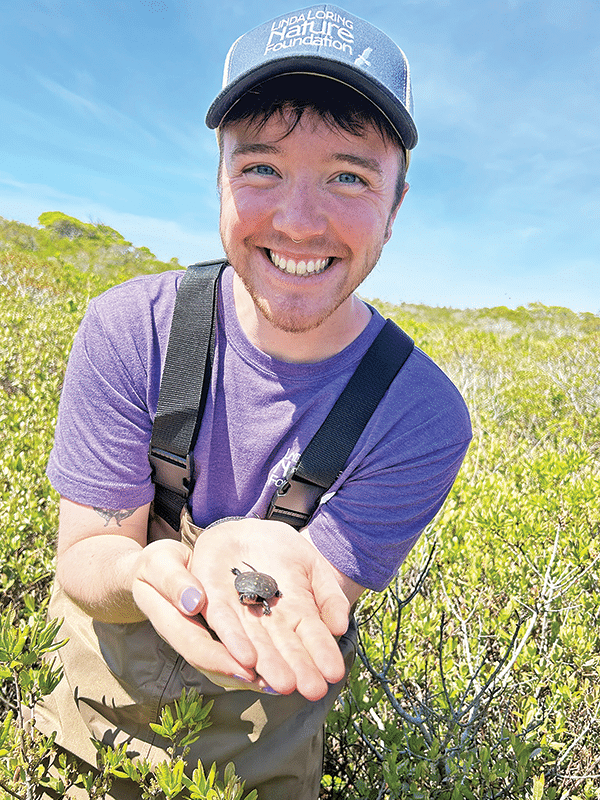
“The experiences that I am having on-island are so well-rounded. I came in on an education pathway (to LLNF), and I was able to get so many tools in my tool belt in terms of research and stewardship,” Lucas said.
The LLNF helped hone his interests, the way an internship should, illuminating both what he wanted to explore and what he didn’t. From that summer experience, Lucas knew he wanted to pursue more wildlife conservation and research. When Lucas left Nantucket in the fall of 2025, he didn’t necessarily plan to return to Nantucket. But the island, and the great diversity of conservation work available, called him back. Lucas returned in 2026 to work for the Nantucket Conservation Foundation as their Seasonal Wildlife Field Assistant.
“Now for my NCF job, I am working on five or six different projects plus the collaborative work of IPSC (Invasive Plant Species Committee). There is so much that you get to touch on that is just not common for these types of jobs. I think that Nantucket provides such a well-rounded experience,” Lucas commented.
Despite its relatively small size, Nantucket is big on conservation work opportunities. Sometimes seasonal folks worry that it may feel isolating, being so far out at sea. But the sheer number of people working towards common goals, the amount of open space, and the encouragement of mentors at the various organizations all help to make the island feel far from isolating.
Lucas noted, “Being in conservation on Nantucket, especially very early in your career, gives you such an optimistic and positive look into what a cross-collaboration can look like. And how conservation can interact with the community and what it can provide. It’s been a positive example of that interaction and professionally what your part in that can be.”
Every organization on-island builds their internships and seasonal staffing differently. But there is a similarity among these types of positions in that Nantucket itself is the ideal training ground. Within a relatively small geographic area, there are a diversity of habitats to study. But the two things that Nantucket really has going for it is the amount of conservation land and the conservation professionals to help train the next generation of scientists.
Through the various positions on-island, interns build technical field skills like hands-on experiences in ecological restoration, wildlife monitoring, habitat mapping, and invasive species removal, among other topics. Seasonal staff can also acquire some specialized knowledge depending on the projects: dive deep into localized ecological processes, specific species interactions, and niche conservation techniques.
Another past LLNF intern I spoke with is Nantucket native, Luke MacKay. Luke was also an Ecological Education Intern working with LLNF in the summer of 2022. Being from the island, the position helped him view Nantucket in a different way. He expressed how grateful he is to have grown up here with so many opportunities to explore his interest in environmental science. Going off to college and learning about ecological principles and then being able to put those lessons into practice.
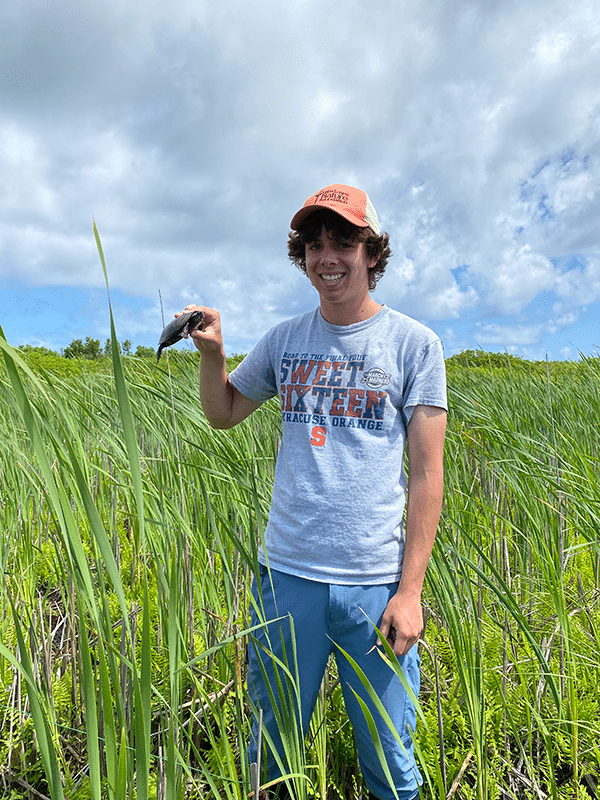
“I learned so many lessons from all the staff at Linda Loring. But it was also just seeing how a small non-profit works. The biodiversity of the property, the stewardship side, and then also the environmental education side, and just seeing the impacts from all the different aspects was really rewarding. I learned what a multifaceted field this is.”
Luke then went on to do an internship the following summer with the Nantucket Land and Water Council as their eel grass intern and then as a policy intern with them—a connection he made during an invasive plant pull the previous summer.
“Growing up walking on trails around the island, I underestimated the amount of love, care, and investment on every parcel of property. Once I was working in my internship, I was so impressed with how much the staff knew about every nook and cranny on the property,” said MacKay. “My experiences here were beyond valuable, especially in the off-island world. The experiences really helped me with my classes, my research, and my work-career.”
Ava Boettiger is a current LLNF intern and hails from Texas. Before this summer, she had only briefly visited New England. One of her first impressions starting this spring was how much “wild landscape” there is to explore. She was also impressed with how many different and collaborative conservation organizations there are in a small place like Nantucket.
Ava specifically mentioned one unexpected outcome of her work this summer is her gaining leadership and science communication experience. But one of her biggest take-homes echoes what Luke MacKay had said. “Working here (LLNF), I am really seeing an example of what permanent positions in this field could be and all the potential careers in non-profit conservation work,” Boettiger said.
The qualities that make a Nantucket internship experience unique have a lot to do with the island itself. Isolation breeds partnership, so island organizations are more willing to help each other out. There are lots of opportunities for collaboration and learning. Sometimes it’s been “all hands on deck” for projects like the American burying beetle, horseshoe crab surveys, eel grass surveys, restoration plantings, and invasive plant management. These are big projects where field crews and volunteers from different organizations come together to achieve a goal even if it’s another organization’s project. Seasonal staff member Lucas Leasure said that these collaborative projects are one of the highlights of working for on-island organizations. Collaboration allows for cross-pollination!
One of the things many seasonal staff mention is housing availability. All the Nantucket non-profit organizations are only able to attract such stellar seasonal staff is by providing housing. And, as one LLNF intern mentioned, “good housing” (private and clean with good housing culture) is so important.
For many of these interns and season staff, these positions may be their first jobs after graduating. The year-round staff that mentor interns can be influential and provide important guidance. Lucas noted, “Both at LLNF and the staff I am working with at NCF are really high-caliber professionals providing a great look into what is a career in conservation that is accessible. This is what happy people look like, and it’s interesting to see how an organization cares for its people.”
Nantucket seasonal jobs are out there. The conservation groups on-island advertise on multiple job boards specific to each internship (wildlife, environmental education, etc.), and they share the information locally as well. It’s a competitive market out there, but potential applicants shouldn’t be dissuaded. Jobs are generally posted during January or February. Word is getting out about the caliber of Nantucket research and internship opportunities. It means only good things for the island’s conservation work and learning more about the priority habitats, the flora and fauna, that we all appreciate.
For details, follow your favorite Nantucket conservation groups, check out their websites, or chat with a local professional.