



by Dr. Sarah Treanor Bois, PhD
Director of Research & Conservation at the Linda Loring Nature Foundation
The Nantucket Invasive Plant Species Committee (IPSC) was created as a subcommittee of the Nantucket Biodiversity Initiative around 2004. The IPSC has a goal to identify, track, manage and educate the public about the island’s non-native invasive plants. IPSC organizes group pulling events for some problematic species and works to educate the public about identification and management. When IPSC was first created, there was a list of concerning species that we wanted to monitor on island. We called them the “invaders” and worked to bring awareness so people could report them. This list came primarily from the mainland and other parts of southern New England where problems were first noticed and studied. We wanted to learn from our nearest neighbors as a way to prevent what we saw from happening in other places. After more than 20 years, it’s interesting to note which plants have actually become the problems we expected, and which ones have been more manageable in the long run.
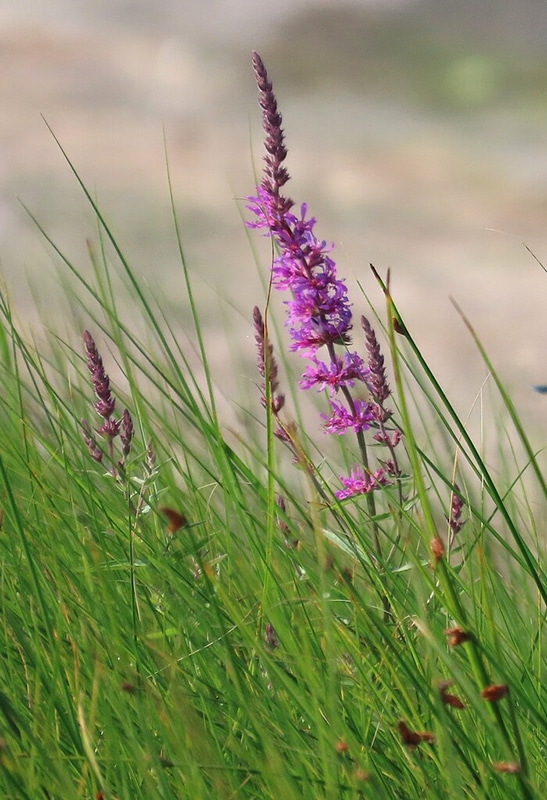
One plant that isn’t as bad as it used to be is purple loosestrife (Lythrum salicaria). A lot of mapping and research went into purple loosestrife in the early 2000s. Ernie Steinauer from Mass Audubon did an extensive study on the spread of the plant at Sesachacha Pond. Since then, loosestrife beetles, a biocontrol released throughout New England, has helped to curb the plant’s spread. The beetles feed exclusively on the leaves and stems of the loosestrife plant, significantly stunting its growth and reducing seed production without harming most native flora. It’s still present onisland in wet pond margins like Miacomet Pond, but it is no longer the threat to native biodiversity we once feared.
Another in that category is Japanese barberry (Berberis thunbergii). We had this on our early list for its problematic nature throughout the woods of southern New England especially western Massachusetts and Connecticut where it invades the understory forests. It has never truly gotten a foothold on Nantucket like we expected. Barberry, like other species on this list, was added early on to the Massachusetts Prohibited Plant List and so can no longer be planted. This reduction of availability and lack of further spread has limited its impact on island.
Autumn olive (Elaeagnus umbellate) was also once predicted to cover Nantucket. As a nitrogen-fixer, it can invade almost any habitat including our nutrient-poor, sandy soils. It is definitely still found here in places like Gardner Farm and other disturbed areas on edges such as those found at Mill Hill Park. But autumn olive isn’t invading with the tenacity we once expected. Autumn olive is still widely classified as an invasive species in our region disrupting native ecosystems, but some professional perspectives view it as less catastrophically harmful than once feared because it acts as a temporary pioneer species. Still keep an eye out for the bird-dispersed seedlings, but it no longer makes the top 10 list of problematic species on Nantucket.
Other plants on the early IPSC list have proven themselves to be just as problematic as we expected. From habitat degradation to infrastructure impacts, nothing is more invasive than Japanese knotweed (Fallopia japonica). Early IPSC management projects with knotweed worked to remove the plant without chemicals. Managing infested areas by hand proved costly and time consuming with limited long-term effects. In the end, the recommendation is 1) remove as soon as possible and 2) clip and drip. Herbicides are the best tool in the toolbox for this aggressive species. But you can read more about management options here: ipm.cahnr.uconn.edu/invasive_plants_japanese_knotweed.
Shrubby invaders like our honeysuckles and privet species (Lonicera ssp. and Ligustrum ssp.) have also continued to be a problem escaping into conservation and open space lands. These species are easily spread by birds who eat the fruit and poop them out elsewhere on island. When the seeds germinate, often in the “middle of nowhere,” they can take off, creating isolated patches than can grow undetected for years. Eradication of the species is now likely impossible, and management is more about triage and protecting specific resources.
Spotted knapweed (Centaurea Stoebe) and garlic mustard (Alliaria petiolata) are both herbaceous plants that the IPSC continues to manage throughout the island. Their small, sometimes inconspicuous nature makes them seem like less of a concern. But both species have been on our list for more than 20 years. These are the two species where we are making headway in managing by hand-pulling. Both are winddispersed and seeds can persist in the soil for decades. We’ve managed to suppress multiple populations along Madaket Road bike paths, Eel Point Road, and pathways along the south shore by Cisco. But the efforts are far from over. Persistence pays off, but complete eradication seems unlikely at this point. Once again, it becomes more about triaging the management and looking to the areas we want to protect, like our sandplain grasslands and other priority habits.
Today, we have some newer plants to the island that we never could have expected way back in 2004. Some of the plants on the list are accidentally novel washashores. Black swallowwort (Cynanchum louiseae), for example, is an herbaceous vine now spreading throughout the island with footholds along Madaket Road and in Sconset. It was likely a weedy hitchhiker on another plant decades ago. The wind dispersal and tenacious growth mean it’s hard to control. We’re still actively tracking and removing the plant, but it remains to be seen how successful these efforts will be.
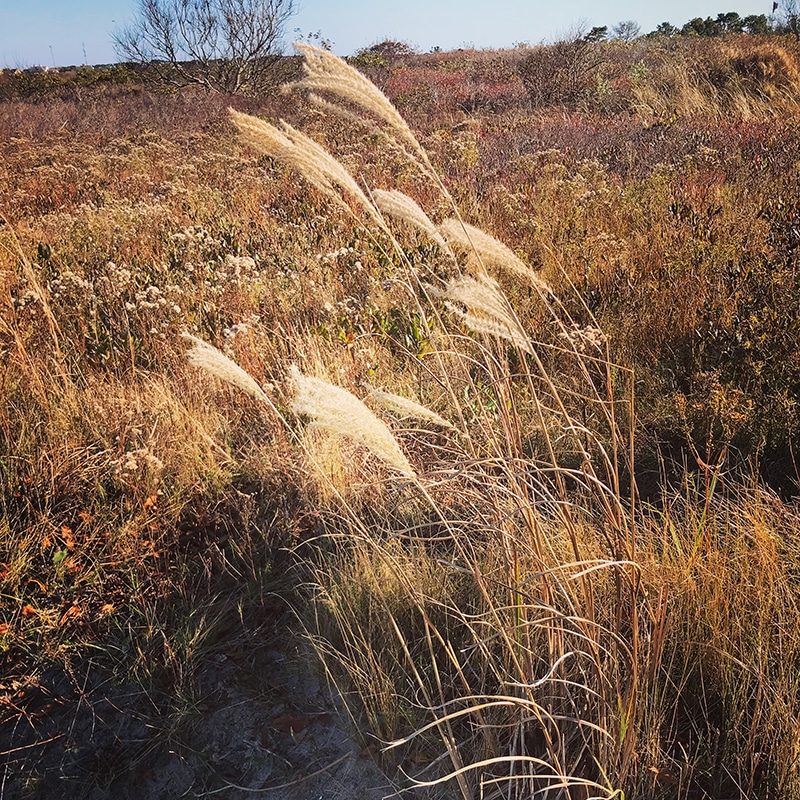
The real “winners” of late in being the newest and toughest invaders are the suite of ornamental grasses. Many of these species like Chinese silver grass (Miscanthus sinensis) and weeping love grass (Eragrostis curvula) have been popular in the landscape trade lining driveways and road edges. These grasses may look beautiful, but they are invading into our sandplain grasslands and coastal heathlands—priority habitats on the island and also in the state. For these species, in addition to eradication, which involves digging up clumps by hand, the IPSC has worked to change state policy as well. Both species have been added to the MA Prohibited Plant List, which means they can no longer be sold in the state of Massachusetts. We may still have to manage plants on our island, but we are working to stop the continued introduction of the species.
That’s the best part about science: we have questions, we investigate, research, and learn more. Then we use that new knowledge to make management and research actions. The IPSC, the various conservation organizations, and local scientists continue to document and study the issue of non-native, invasive species. Who knows what the next 20 years will bring?