


by Shawn Roberts
I never needed an alarm clock on the Fourth of July. I was always awake before anyone had to tell me it was time: the excitement had a way of beating the sunrise. Before the coffee was brewed or breakfast was finished, I was already figuring out which friends to call. One by one we’d meet on our bikes, towels draped over our handlebars, pockets full of nothing, and an entire island ahead of us.
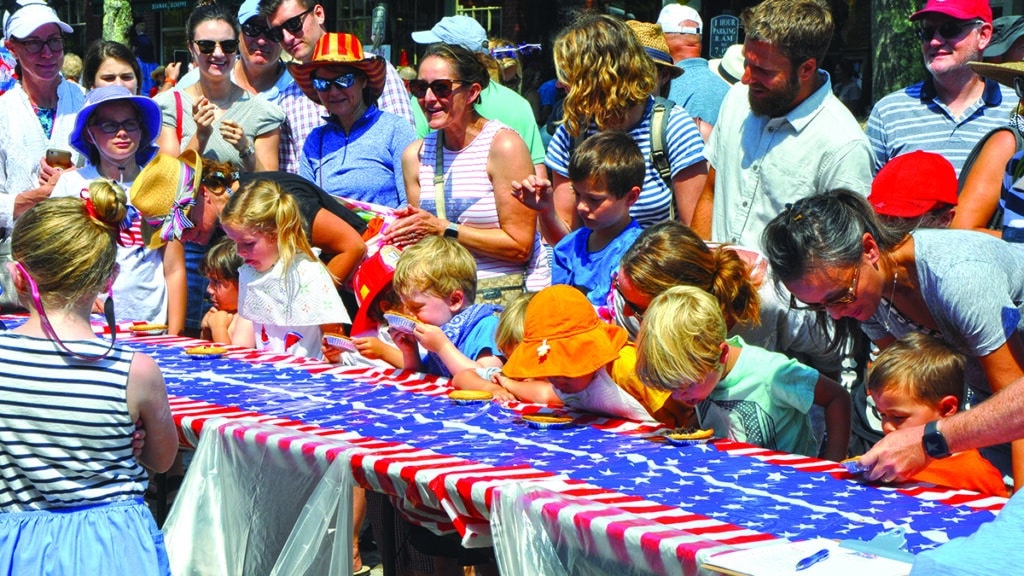
As a kid, I believed there were only two ways to become famous: playing for the Red Sox or winning the pie-eating contest on Main Street. The Red Sox seemed like a long shot, so every Fourth of July I put all my faith in blueberry pie. I was certain that if I won, people would remember my name forever. Childhood has a wonderful way of turning small victories into world championships. I can’t remember who ever won those contests, but I remember the glory. Faces disappeared beneath whipped cream, blueberry filling stained shirts, and parents laughed until tears rolled down their cheeks. Every kid walked away looking ridiculous, and every one of us secretly hoped we looked like champions.
By midmorning, the childhood paradise we’d been enjoying opened its doors to the rest of the world, and Nantucket did what it has done every Fourth for as long as I can remember. It exploded. Not just with fireworks, but with people. The island swelled like a tide that forgot when it was supposed to turn around. Cars rolled slowly over old cobblestones, bicycle bells rang from every direction, beach chairs balanced on wagon handles, and coolers bounced behind bikes. Every sidewalk seemed to lead somewhere worth going.
People love to complain that Nantucket is too crowded on the Fourth. I don’t remember my childhood Fourths feeling crowded—I remember them feeling full. Full of neighbors, laughter, bikes, boats, and families. It was full of the wonderful realization that thousands of people had looked at a map and decided there was nowhere on earth they’d rather celebrate than on our little island thirty miles out to sea.
Around here, traffic has always been a little different. At an intersection, someone waves, someone waves back, and another car pulls through. Nobody seems to mind. Maybe it’s because we all know we’re going to bump into each other again before dinner anyway. We’ll stand in the same line for ice cream, pass each other on Main Street, and end up watching the same fireworks from different blankets. On Nantucket, patience isn’t something you practice, it’s just part of living on an island.
By noon, if you were dry, you were doing the Fourth wrong. The annual water fight transformed downtown into absolute mayhem, and every kid wanted to be in the middle of it. Water poured downhill between cobblestones worn smooth by centuries of wagon wheels, whalers, fishermen, workers, dreamers, and children. Those stones have carried nearly every chapter of Nantucket’s history. On the Fourth, they carried rivers. Everyone was soaked, and that was the point. Adults who pretended they didn’t want to get splashed somehow laughed the hardest when they did. For one afternoon, dignity took the day off.
Eventually, the smell changed. Salt air gave way to warm waffle cones, and everyone drifted toward the longest line in town. It wrapped around the building and spilled down the sidewalk, but no one complained. Why would they? Every person standing there had hoped, months earlier, that this is exactly where they’d be on the Fourth of July. Someone caught up with an old friend, someone swapped fishing stories, and someone insisted this had to be the busiest summer Nantucket had ever seen. The locals just smiled: they’d heard that one before.
Then everyone found their way to the beach. Blankets overlapped, beach chairs nearly touched, and kids somehow squeezed through tiny gaps without spilling a single bucket of sand. It struck me years later that this is what paradise actually looks like. Not an empty beach, but a full one. A place where nobody minds making room for one more family because everyone understands they’re sharing something special.
One Fourth, while my dad was catering an event, my mom loaded us into our little Boston Whaler so we could watch the fireworks anchored near the Jetties. To a kid, it felt like we’d discovered the best seats on the island. The colors burst overhead while they shimmered across the harbor, and I remember thinking there couldn’t possibly be a better place on earth to watch the Fourth of July. Then our little boat decided it had other plans. We lost power. Before we could drift toward the stone jetties, another island family came alongside and towed us safely back to the dock. Nobody panicked, and nobody made a big deal out of it. It was simply one island family helping another get home.
Looking back, I think I love that part of the story as much as I love the fireworks. Nantucket was built on that exact brand of quiet, reflex-like dependency. Centuries ago, when the whaleships left the harbor, the people staying behind knew that survival wasn’t a solo venture: it required an entire town looking out for one another. That DNA never really left the soil. On the Fourth, it’s easy to get swept up in the grand, sweeping ideas of country and patriotism, but patriotism on a sandbar feels a little more intimate. It’s stripped of politics and grandstanding. Out here, the holiday becomes a reminder that being countrymen starts with being good neighbors. It’s the realization that we are bound to each other not just by a flag, but by the shared space we inhabit and the small, daily choices we make to take care of it.
That boat ride home together wasn’t ruined by the breakdown—it was elevated by it. Sitting on the deck as we were towed back, watching the stars compete with the last trails of smoke over the harbor, I didn’t feel the sting of a failed excursion. I felt an overwhelming sense of safety. I was a kid looking around at a dark ocean, realizing that we belonged to a community that genuinely cared. One where you are never truly stranded. We weren’t just a collection of tourists and residents occupying the same zip code for a weekend. For that one night, huddled under a shared blanket, we were a family among families, entirely connected.
The island has a funny way of reminding us that we don’t experience this place alone. We borrow moments from it, and we borrow kindness from each other. The wind changes, the tide changes, and plans change, but somehow, the people always seem to show up when they need to.
Maybe that’s why the Fourth has stayed with me all these years. It isn’t just the fireworks. It’s the smell of warm waffle cones mixing with salt air and gunpowder. It’s the taste of a lobster roll eaten with sandy hands before ending the evening with a mudslide. It’s bicycle bells echoing down Main Street, children laughing through blueberry-stained smiles, and neighbors calling to one another across a crowded harbor. Most of all, it’s the reminder that some of life’s greatest moments aren’t quiet at all. They’re wonderfully loud, messy, crowded, and shared.
Every year, the fireworks explode over Nantucket Harbor, but I’ve come to believe the real fireworks happen down here. Between old cobblestones running like rivers, on beaches where strangers gladly slide their blankets a little closer together, in children who still believe a pie-eating contest can make them famous, and in the simple wave exchanged at an intersection because both drivers know they’ll probably see each other again before the day is through.
We never really own a Fourth of July on Nantucket. We borrow it, just like we borrow summer itself. And maybe that’s why it means so much. Because the best things in life aren’t precious despite the fact that they end. They’re precious because they do.